Est. 2026 · संस्कृत पञ्चाङ्गम्
A daily verse, and the calendar behind it.
Sanskrit Calendar pairs a classical Subhashita — a verse of wisdom from the Gita, the Upanishads, Panchatantra and beyond — with the Sanskrit calendar system itself: the Samvatsara year cycle, the twelve Masa (months), and the Panchanga terms every Hindu almanac is built from.
New here? Start in three steps
97 pages is a lot to browse blind — here's the order we'd read them in.
Learn the five limbs
Start with the Panchanga overview — the five daily measurements (Tithi, Vara, Nakshatra, Yoga, Karana) everything else on this site is built from.
Read the Panchanga overview →See how the year is counted
Then the calendar systems themselves — Vikram Samvat, Shaka Samvat, and the 60-year Samvatsara cycle running alongside them both.
See the Indian Calendar map →Put it into practice
Finally, see it applied — why festival names mean what they do, and what's traditionally weighed when choosing an auspicious Muhurta.
Browse festival etymology →Coming up in the Panchang
Countdown
Explore everything
Every corner of the site, at a glance.
Sanskrit, one word and one name at a time
A word and a name, pulled from our growing reference lists.
Today, in Sanskrit
Vasara, Masa and Samvatsara — the day, month and year.
The Masa Chakra
Twelve months, one turning wheel
The Sanskrit lunar year runs Chaitra to Phalguna — twelve Masa grouped into six Ritu (seasons) of two months each. Each month takes its name from the Nakshatra the Moon was full in, a naming system going back to the Vedas themselves.
The five limbs of the Panchanga
Each explained from its Sanskrit root, not just its function.
पञ्चाङ्गम् — "five limbs" — is the name for the almanac built from these five daily measurements. Tap any point on the wheel, or a card below, to go deeper into that element's Sanskrit root and full reference list.
Calendar systems, mapped
Vikram Samvat, Shaka Samvat, and how it all fits together.
How to Read a Panchang
What each part of a Panchang page tells you.
Indian Calendar
How every system here relates to the others.
Vikram Samvat
The traditional era, ~57 years ahead of Gregorian.
Shaka Samvat
India's official National Calendar era.
Lunar Calendar
What "lunar" and "lunisolar" actually mean.
Solar Calendar
Why Tamil New Year lands on the same date every year.
Muhurta — auspicious timing
What's traditionally considered for each kind of occasion.
All Muhurta types →Sanskrit knowledge
Words, names and numbers beyond the calendar.
What you'll find here
A small, focused reference — not another festival-date aggregator.
Subhashita of the Day
24 classical verses on rotation — Gita, Upanishads, Panchatantra, Chanakya Niti — with Devanagari, transliteration and plain-language meaning.
Panchanga, from the roots up
Tithi, Vasara, Nakshatra, Yoga, Karana — explained through their Sanskrit etymology, not just their function.
The Samvatsara cycle
All 60 named years of the Brihaspati (Jupiter) cycle, with today's year highlighted.
Sanskrit numerals
1 to 100 in Devanagari, with transliteration — the number system behind Panchanga calculations.
The six Ritus
Vasanta to Shishira — the season cycle classical Sanskrit poetry was built around.
No clutter
No auto-playing audio, no pop-ups, no account required — just the verse and the calendar around it.
Common questions
All 27 questions →What is a Panchanga?
पञ्चाङ्गम् (pañcāṅgam) means "five limbs" — the Hindu almanac built from five daily measurements: Tithi, Vara, Nakshatra, Yoga and Karana.
What is a Samvatsara?
Samvatsara is the Sanskrit word for "year" in the 60-year Jupiter (Brihaspati) cycle used in the Hindu calendar. Each of the 60 years has its own name; once the cycle completes, it begins again from the first name, Prabhava.
What's the difference between Vikram Samvat and Shaka Samvat?
Vikram Samvat (epoch 57 BCE) is the traditional era used religiously and civilly across North India and Nepal. Shaka Samvat (epoch 78 CE) is the era behind India's official National Calendar.
Why does the Sanskrit calendar have 6 seasons instead of 4?
The Ritu system divides the year into six two-month seasons — Vasanta, Grishma, Varsha, Sharad, Hemanta and Shishira — a classical Indian framework that predates and differs from the four-season model common in temperate climates.
Is this the same as a Hindu Panchang?
Related, but focused differently — this site is about the Sanskrit language and terminology behind the calendar (etymology, the Samvatsara cycle, numerals, verses) rather than daily festival dates or Muhurat timing.
New — From the Shop
Take the Calendar Off Your Screen — Now in Sanskrit & Hindi
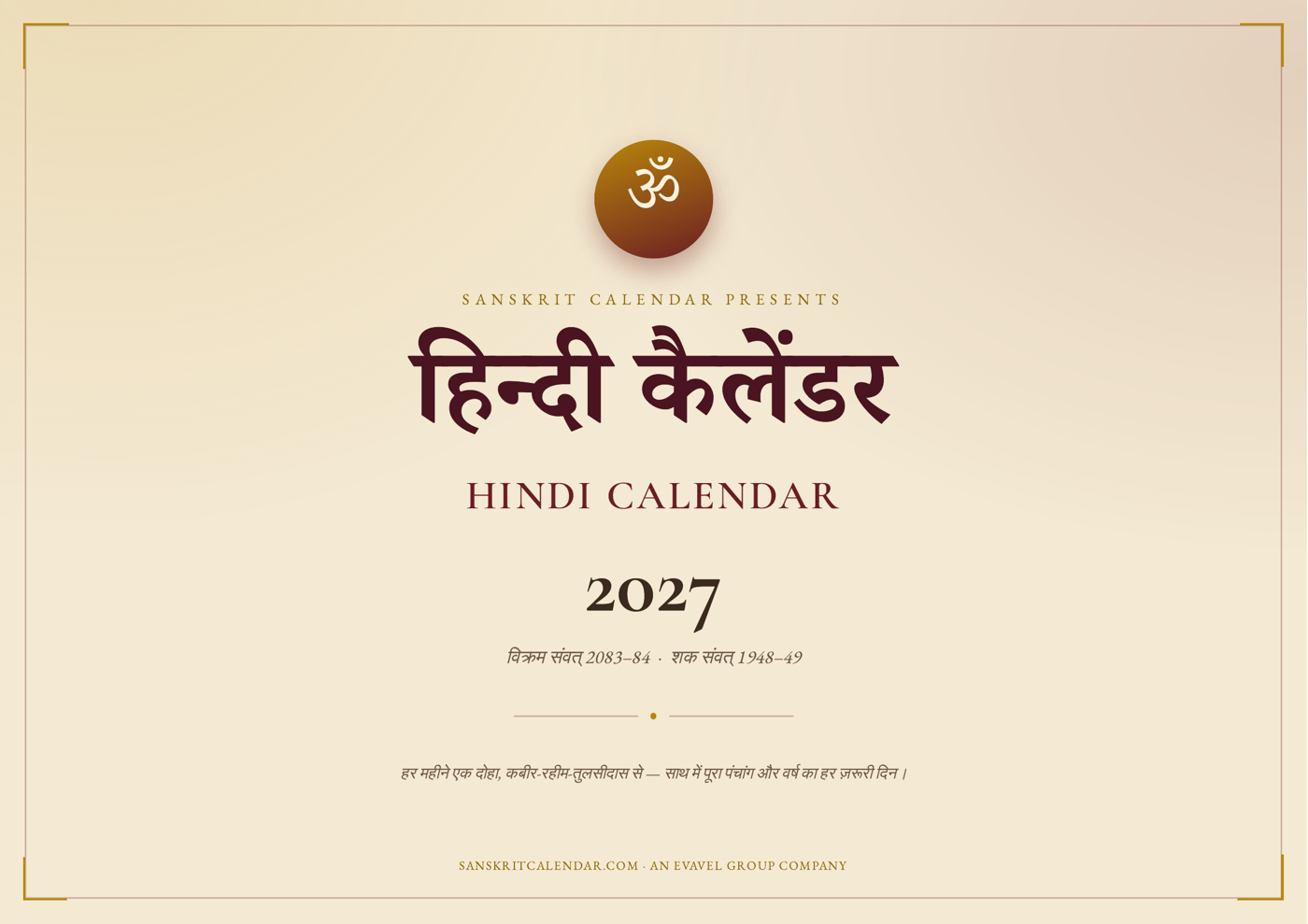
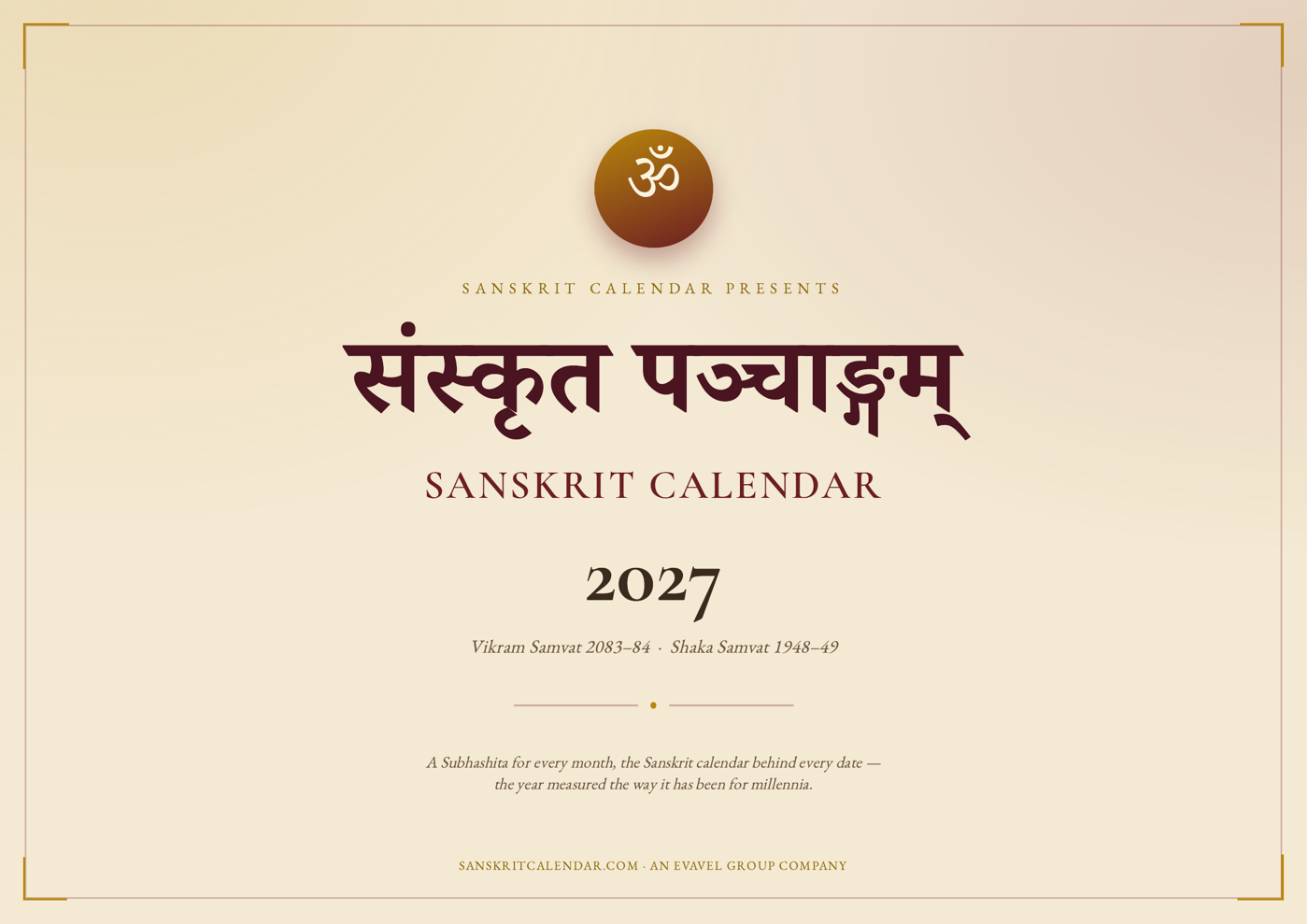
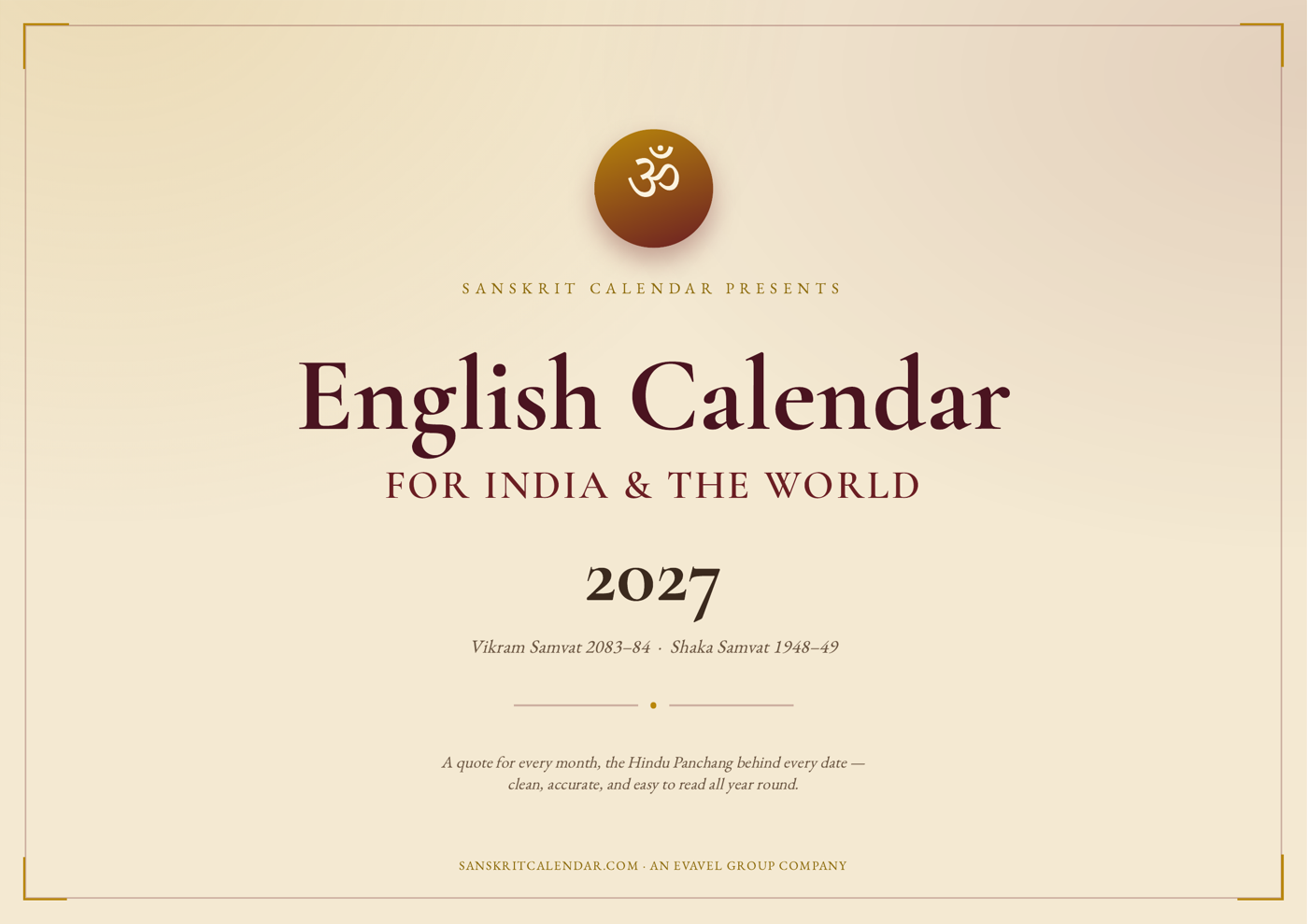
Premium, print-ready A3 calendars for 2027 — a Subhashita or Doha for every month, the full Panchang date grid, Vikram & Shaka Samvat. Instant PDF download, ₹249.
— Part of the Daily Calendar Network
Daily Calendar
Festivals, holidays, Panchang dates and horoscopes for India — the flagship site in this network.
Explore Daily Calendar →Hindu Calendar
Today's live Panchang — Tithi, Nakshatra, Yoga, Karana and Vara — plus Vikram/Shaka Samvat.
Explore Hindu Calendar →Kundali.One
Free Janam Kundali, Rashi and Nakshatra analysis, Dasha timing and Kundali Milan — Vedic astrology explained plainly.
Explore Kundali.One →Disclaimer: Sanskrit Calendar is an independent educational reference, not a religious authority or Panchang publisher. Samvatsara and month calculations are approximate and can vary by a day depending on the specific Panchang tradition followed. See our full Disclaimer.